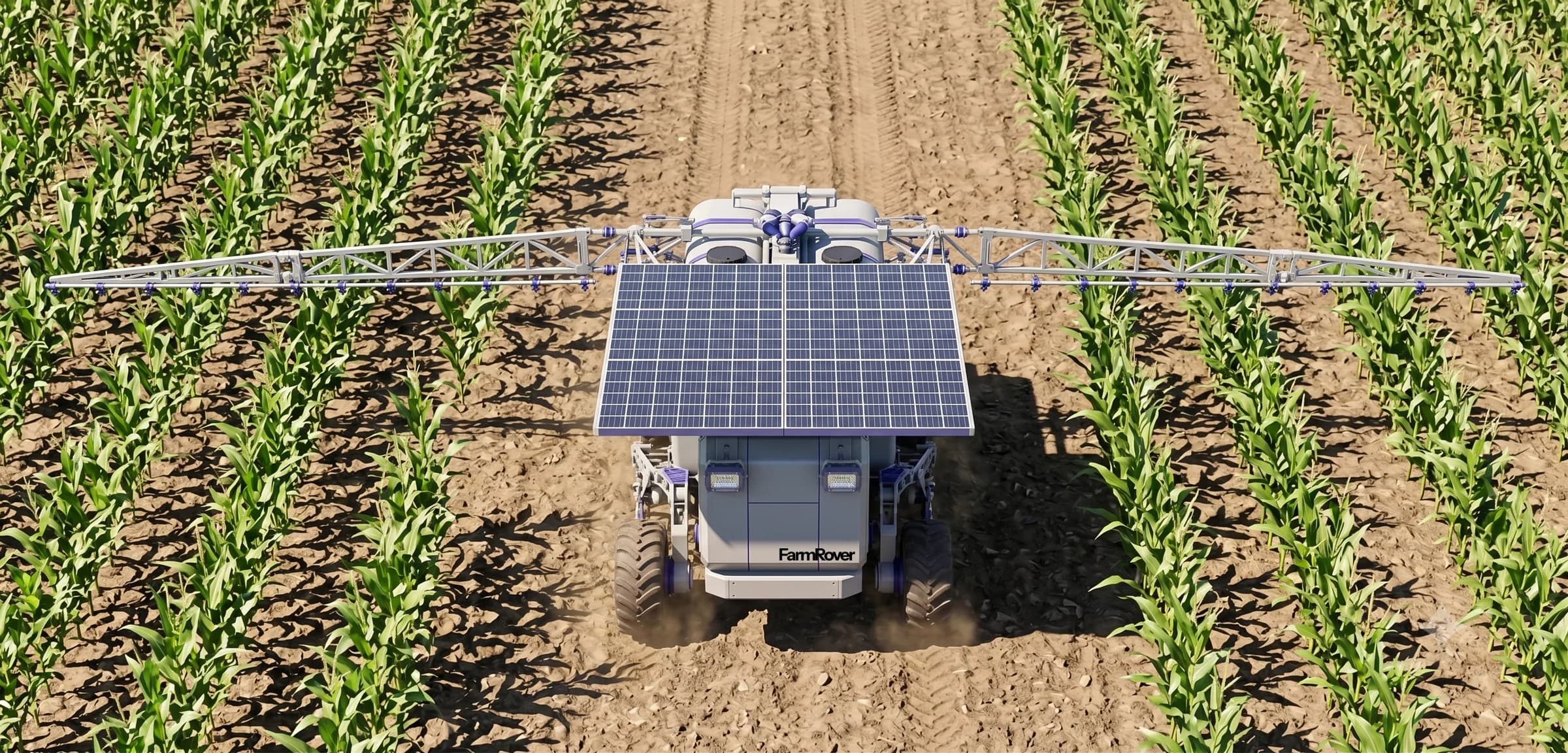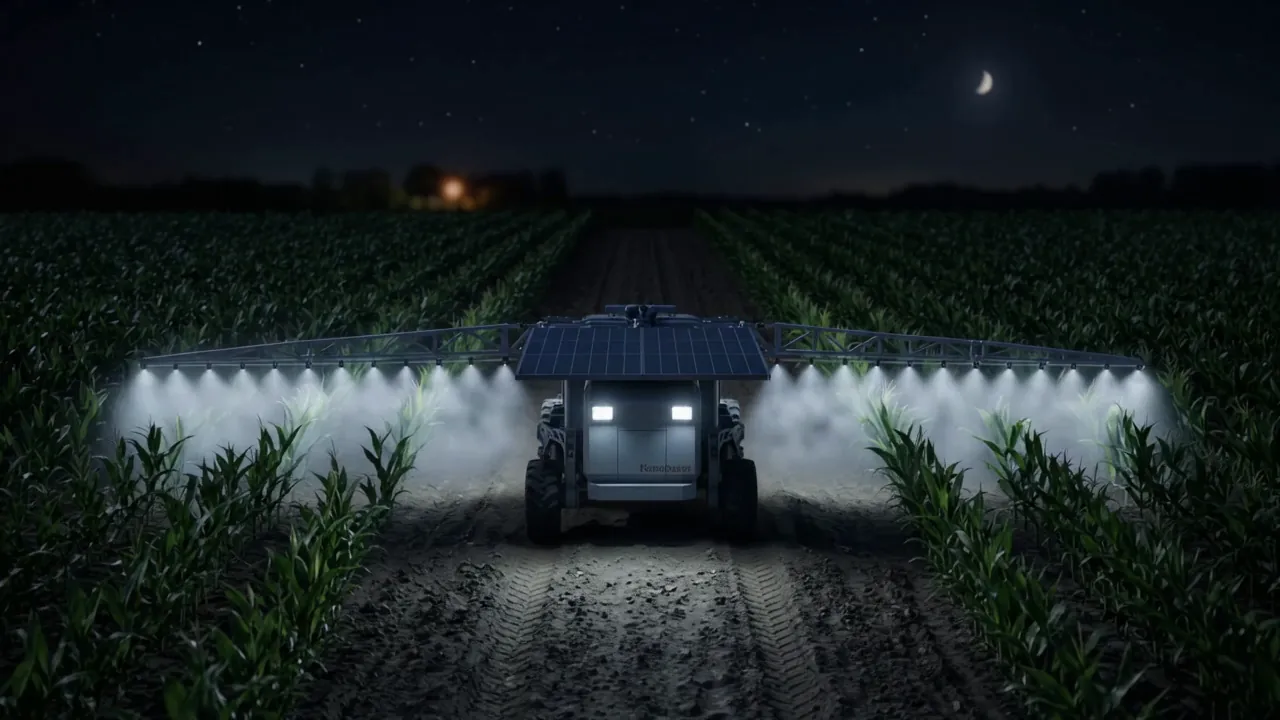
The fertiliser factory that comes to the farm.
Harvora builds plasma-powered machines that make nitrate fertiliser from air and electricity, right where it is used — so a farm's nutrient supply no longer depends on an imported bag arriving on time.
- nitrate solution / hour
- 150 Lnitrate solution / hour
- nitrate concentration
- 12–18 ppmnitrate concentration
- reactor only, rover idle
- 1.3 kWreactor only, rover idle
MVP measurement, not a product specification. Energy per kg of nitrogen, and the gap to viability
Concept visualisation
Fertiliser that is produced, not imported
Nitrogen is the input farms cannot skip and the one least under their control. Producing it on site changes who sets the price, the timing, and the availability.
Cut import exposure
Nitrate is produced on the farm from air and electricity, so supply no longer tracks shipping schedules, import pricing, or currency swings.
Supply you control
Production runs on site and on demand, which means nutrient availability is set by the farm's own schedule rather than a distributor's.
An asset, not a recurring cost
The machine is bought once and produces continuously, shifting fertiliser from a purchased consumable to owned capacity.
Two machines, one chemistry
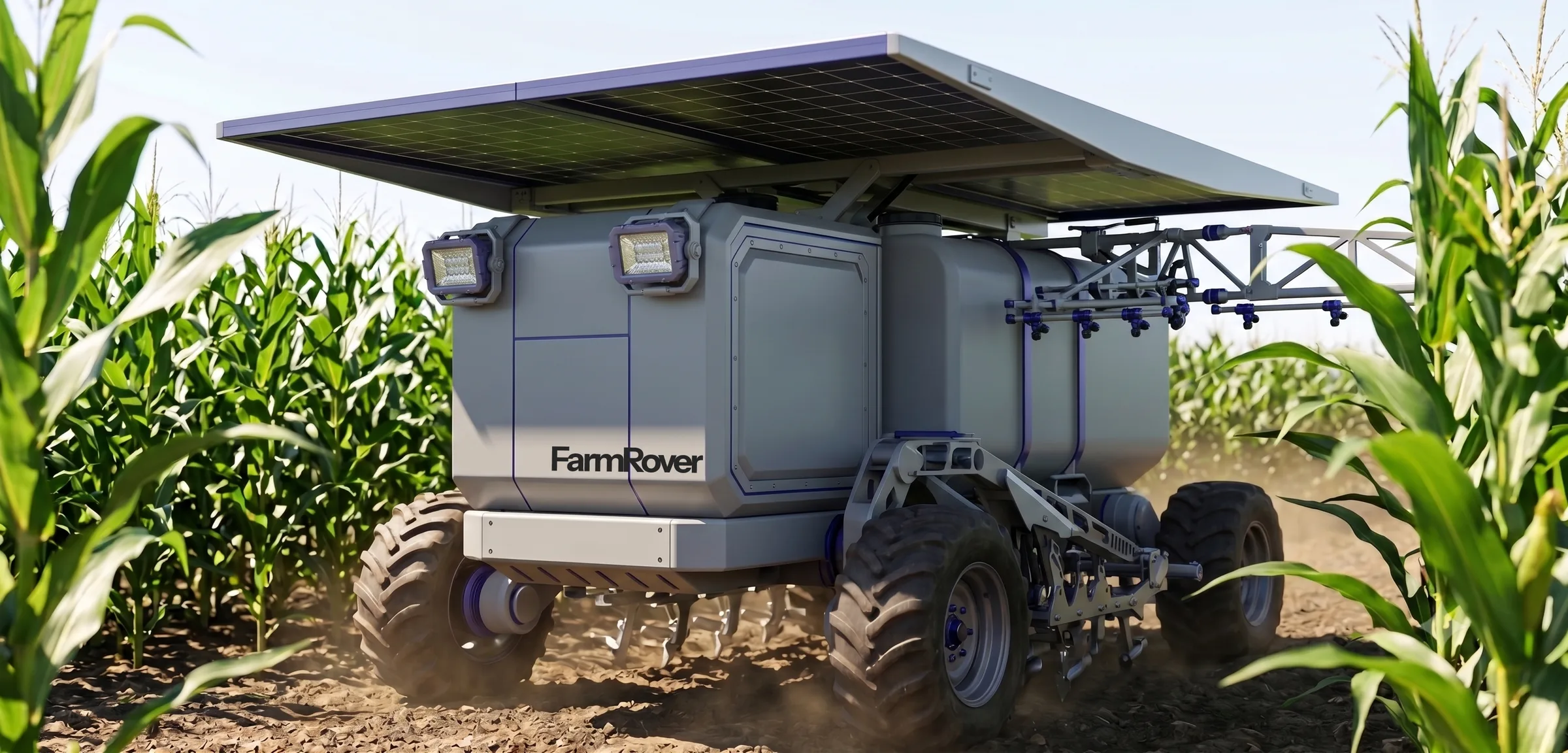
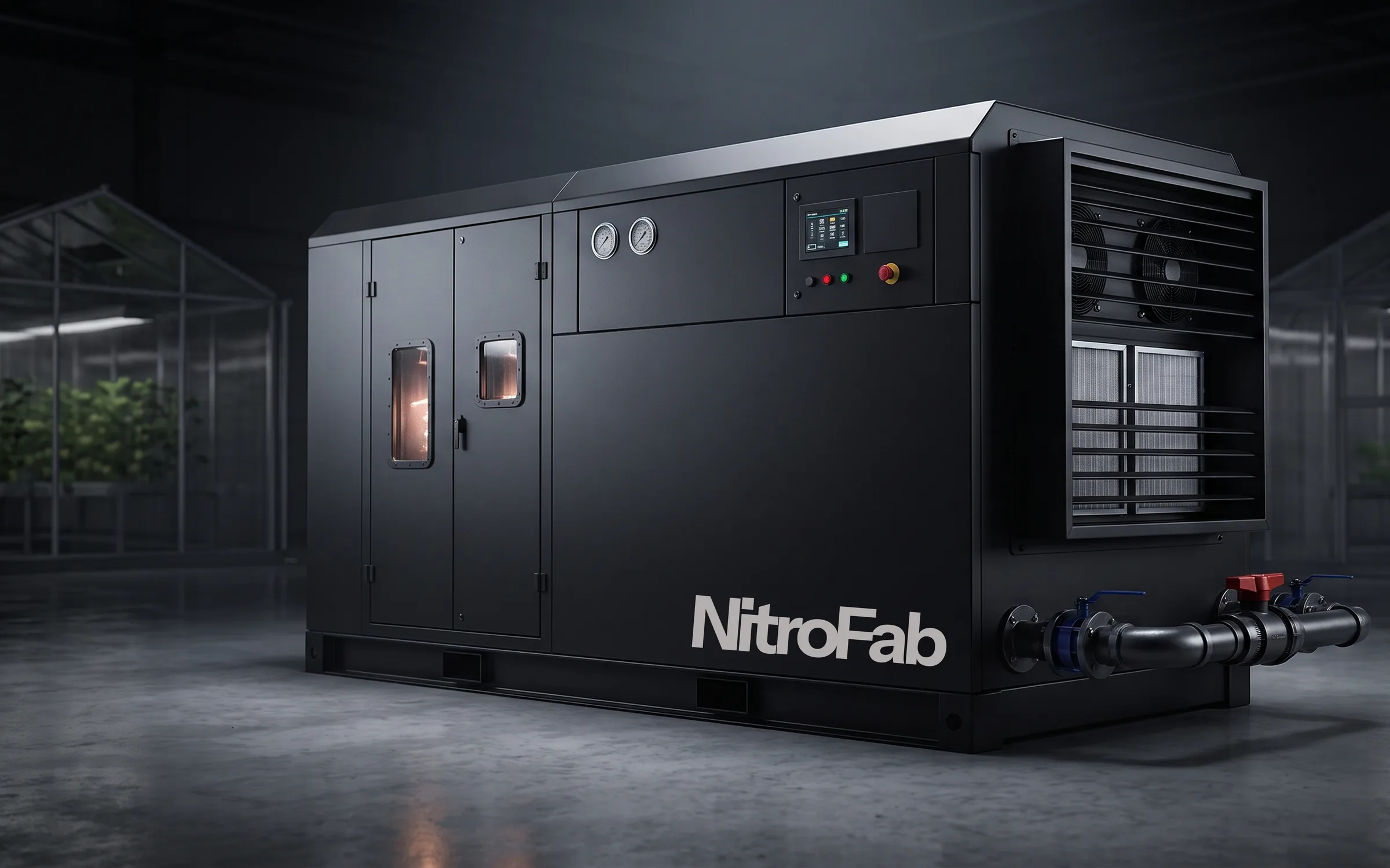
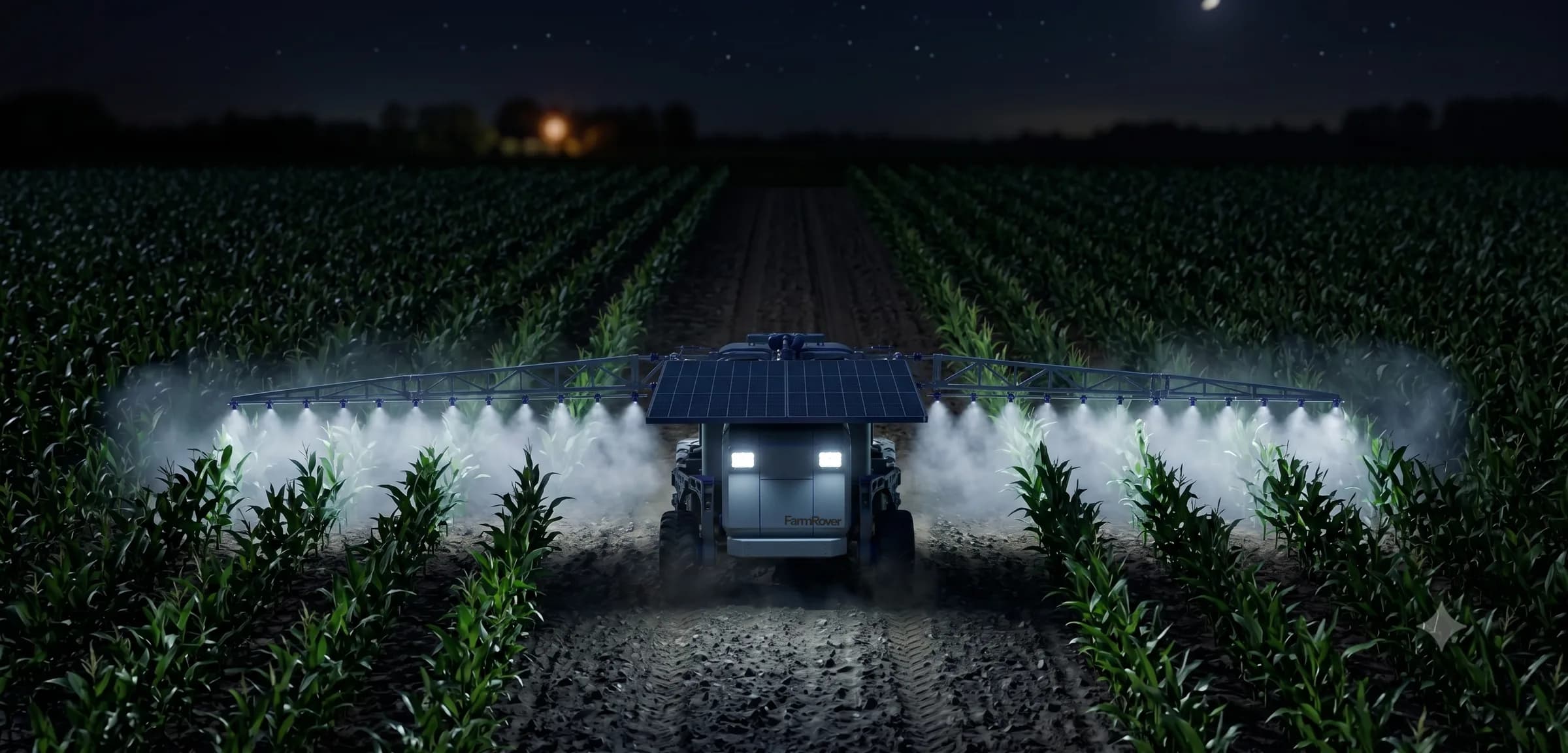
The same Submerged Bubble-Arc Corona Reactor sits behind both products. What changes is where it runs — driven out to the crop, or fixed alongside a greenhouse.
Breaking the bond that holds nitrogen together
Air is about 78% nitrogen, but each molecule is two atoms locked by a triple bond. Harvora's Submerged Bubble-Arc Corona Reactor fires an electrical discharge inside air bubbles held underwater, breaking that bond and dissolving the resulting nitrate straight into the water — no Haber-Bosch plant, no biological fixation, no supply chain.
Designed around the farm that exists today
The system is built for the power, water, and working routine a farm already has, rather than assuming an upgrade to everything around it.
Remote operation
FarmRover is driven remotely, keeping the operator away from the spray and out of difficult terrain.
Works with existing infrastructure
NitroFab is designed to sit alongside the drip and fertigation layout a greenhouse already runs.
Serviceable in the field
The hardware is built to be maintained and adjusted on the farm, not returned to a depot.
Runs on available power
The reactor draws 1.3 kW with the rover idle, and 4 kW with it driving — sized around what a farm can realistically supply.
Results, as they are measured
FarmRover is in field testing. The full laboratory and agronomic dataset — trial conditions, sample sizes and third-party analysis — publishes on 30 September 2026.
- Trial conditions and sample sizesPending
- Independent replicationPending
- Named pilot hosts and partnersPending
Engineering built close to the problem
Harvora is building nutrient production for the farms that carry the most risk when a supply chain fails. The work is done in Ghana, for conditions the team can walk out and stand in.